How to Start a Cloud Kitchen in India: A Practical Guide for Food Entrepreneurs
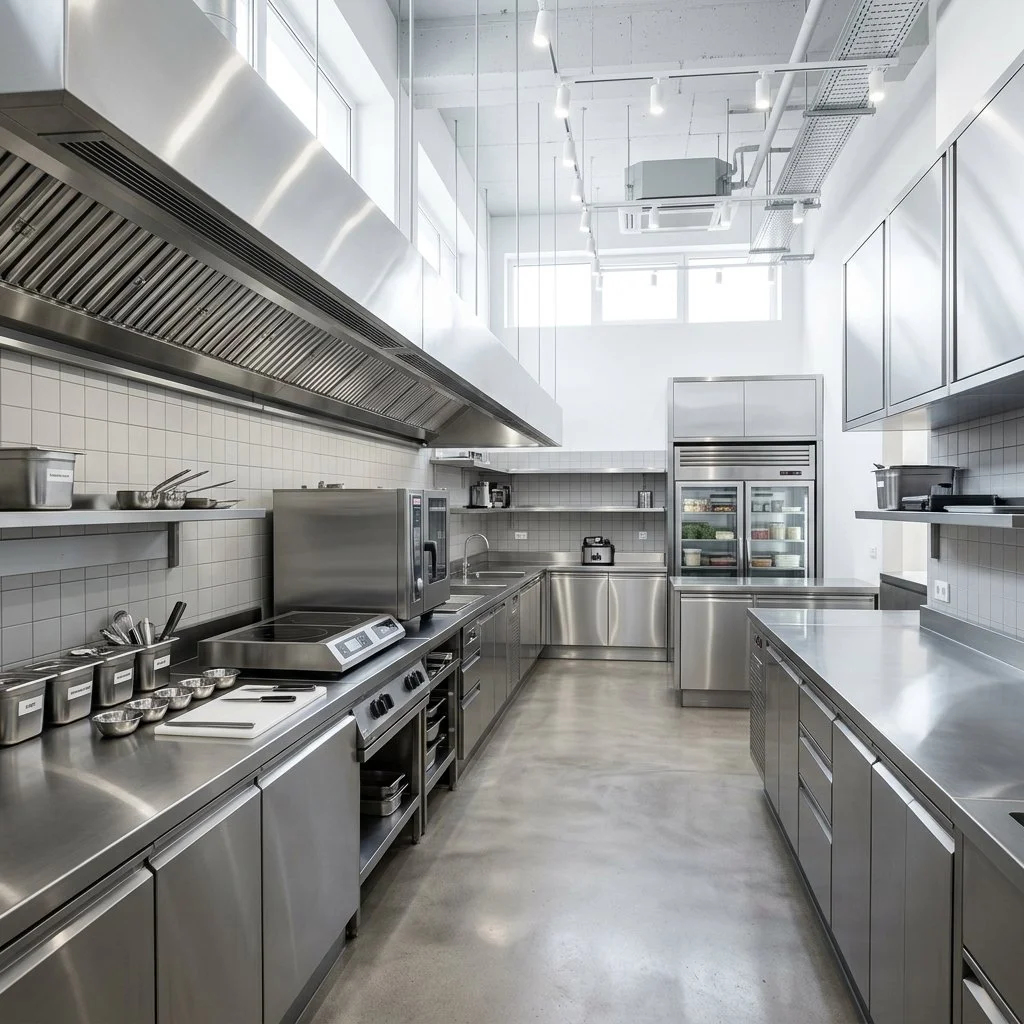
A cloud kitchen can look like one of the easiest ways to start a food business. There is no dining room, no expensive front-of-house design, no prime high-street frontage and no need to build a traditional restaurant from day one.
But a cloud kitchen is not an easy shortcut.
It removes some costs, but it increases the pressure on everything else: food consistency, delivery timing, packaging, online ratings, menu design, hygiene, pricing, platform visibility and repeat orders.
In simple terms, a cloud kitchen is a delivery-first food business. Food is prepared in a kitchen and sold through online ordering channels such as delivery apps, direct ordering, WhatsApp, social media, websites or corporate tie-ups. There may be no dine-in experience at all.
For India, the opportunity is real. Food delivery has become a normal part of urban consumption, and cloud kitchens have become a serious format for chefs, home cooks, restaurant operators, food entrepreneurs and hospitality businesses. But the businesses that survive are not the ones that only know how to cook well. They are the ones that understand the economics, compliance, operations and customer experience behind delivery food.
This guide explains how to start a cloud kitchen in India in a practical, structured way.
What is a cloud kitchen?
A cloud kitchen is a commercial food preparation setup designed mainly for delivery and takeaway. It is also sometimes called a ghost kitchen, dark kitchen, virtual kitchen or delivery kitchen.
Unlike a traditional restaurant, a cloud kitchen does not depend on ambience, seating, walk-ins or table turnover. It depends on online visibility, menu clarity, delivery radius, preparation speed, packaging quality, ratings and repeat orders.
A cloud kitchen may operate in different formats:
Cloud Kitchen ModelBest Suited ForHome-based kitchenSmall pilots, home chefs and early testingIndependent rented kitchenSerious single-brand food businessShared kitchenLower setup cost and faster launchMulti-brand cloud kitchenExperienced operators with strong systemsCentral production kitchenBrands supplying multiple outlets or locations
For most first-time founders, the safest approach is to start with one focused brand, a limited menu and a controlled delivery radius before expanding.
Quick answer: how do you start a cloud kitchen in India?
To start a cloud kitchen in India, choose a focused food concept, validate demand in your target delivery area, estimate setup and operating costs, secure the right licences and registrations, find a practical kitchen location, design an efficient production layout, build a delivery-friendly menu, choose packaging carefully, onboard delivery platforms if needed, and track food cost, ratings, repeat orders and contribution margin from day one.
The process should begin with the business model, not the kitchen equipment.
Step 1: Choose a focused food concept
The first decision is not the kitchen. It is the concept.
Many new cloud kitchens make the mistake of launching with a broad “multi-cuisine” menu. That may feel safe, but it often creates confusion, operational complexity and weak brand recall.
A delivery customer should understand your food brand in a few seconds.
Instead of saying “we sell Indian, Chinese, Continental and snacks,” build a sharper concept such as:
South Indian meals for office lunch
Regional thalis for working households
Premium biryani for family dinners
Healthy bowls for fitness-focused customers
Late-night rolls and wraps
Comfort food for residential neighbourhoods
Fresh breakfast boxes for offices
Homestyle meals for students and young professionals
A strong cloud kitchen concept should answer five questions:
Who is the food for?
When will they order it?
Why will they choose this brand over nearby options?
Will the food travel well?
Can the kitchen produce it consistently every day?
The best cloud kitchen ideas are not always the trendiest. They are the ones where demand, operational simplicity and repeat orders can come together.
Step 2: Validate demand before investing heavily
Before spending on interiors, equipment or a large kitchen, study the market.
Open the delivery apps in your target area and look carefully at what is already selling. Search by cuisine, price point, delivery time and customer ratings. Read reviews. Look at what customers complain about.
You are not doing this to copy another brand. You are doing it to understand demand.
Look for signs such as:
A popular cuisine with poor ratings
High demand but slow delivery times
Weak packaging complaints
Many brands selling the same food with no clear differentiation
Residential or office areas with limited good options
Customers complaining about hygiene, portion size, taste or consistency
A local cuisine that is underrepresented in delivery format
A cloud kitchen should solve a real food problem in a specific area. “People like food” is not enough. “Office workers in this area need reliable South Indian lunch under ₹250” is much clearer.
Step 3: Build the numbers before building the kitchen
A cloud kitchen can generate orders and still lose money.
The basic unit economics must be understood before launch. Every menu item should be evaluated using this simple logic:
Selling price – food cost – packaging cost – delivery platform commission – discount – wastage allowance = contribution margin
For example, if an item sells for ₹300 but the food cost, packaging, discounts and platform charges consume most of that amount, the kitchen may look busy but remain unprofitable.
Track these numbers from the beginning:
MetricWhy it mattersFood cost percentageShows whether the item is commercially viablePackaging cost per orderOften underestimated in delivery businessesAverage order valueDetermines revenue efficiencyPreparation timeAffects delivery speed and ratingsWastageDirectly reduces marginRepeat order rateShows whether customers actually like the brandRating and complaint rateAffects visibility and conversionsDiscount dependencyShows whether the brand can sell without constant offers
A cloud kitchen is not only a cooking business. It is a production, logistics, brand and data business.
Step 4: Decide the right business structure
Before opening, decide how the business will be legally structured. Many small operators start as proprietorships, while others may use a partnership, LLP or private limited company depending on their plans, investors, risk, taxation and scale.
This decision affects bank accounts, tax filings, contracts, platform onboarding, liability and future expansion.
Speak with a chartered accountant or business advisor before finalising the structure. It is easier to set up properly from the beginning than to correct messy paperwork later.
Step 5: Understand licences and compliance in India
Food compliance is not optional.
In India, the Food Safety and Standards Authority of India states that every Food Business Operator is required to be licensed or registered under FSSAI. FSSAI also states that registration is meant for petty food manufacturers with annual turnover up to ₹12 lakh, while food businesses above that limit are required to take a licence.
Applications for new FSSAI licence or registration are handled through FoSCoS, the official Food Safety Compliance System.
Depending on the city, state, premises and scale of operations, a cloud kitchen may also need other registrations or approvals, such as:
FSSAI registration or licence
GST registration, where applicable
Shops and Establishment registration
Trade licence or local municipal approval
Fire safety approval, where applicable
Pollution or waste-related compliance, where applicable
Labour-related registrations, where applicable
Business bank account
PAN and business identity documents
Requirements can vary by location and business model, so do not rely only on generic online advice. Speak to a qualified compliance professional before starting operations.
Step 6: Choose the right kitchen location
A cloud kitchen does not need expensive frontage, but it still needs a smart location.
The right kitchen location should be close to demand, accessible for delivery riders, compliant for food operations and practical for staff, supplies, waste handling and utilities.
Look for:
Dense residential, office or student catchments
Reliable electricity and water
Proper drainage
Ventilation and exhaust possibility
Safe cooking fuel arrangements
Rider pickup access
Raw material receiving area
Waste disposal access
Staff accessibility
Reasonable rent
Landlord permission for food business use
Local compliance suitability
Do not choose a kitchen only because the rent is low. A cheap location with poor delivery access, weak demand or compliance problems can become expensive later.
For a cloud kitchen, location is not about visibility from the road. It is about delivery efficiency and catchment strength.
Step 7: Design the kitchen around workflow
A cloud kitchen should be designed around movement, hygiene and speed.
The basic workflow should be:
Receiving → Storage → Preparation → Cooking → Packing → Dispatch → Cleaning
The kitchen layout should reduce unnecessary movement, avoid cross-contamination and help the team handle peak-hour pressure.
Before buying equipment, finalise the menu. Equipment should follow the menu, not the other way around.
Common cloud kitchen requirements may include:
Refrigeration
Dry storage racks
Preparation tables
Cooking range, induction, oven or tandoor depending on cuisine
Exhaust and ventilation
Washing area
Packaging station
Dispatch counter
Order management screen or POS
Weighing scale
Fire safety equipment
Pest control system
Cleaning and sanitation supplies
The goal is not to create a fancy kitchen. The goal is to create a kitchen that can produce the same food safely, quickly and consistently.
Step 8: Create a delivery-friendly menu
A restaurant menu and a cloud kitchen menu are not the same.
Delivery food must survive time, movement, steam, temperature change and packaging. Some dishes taste excellent at the table but become poor delivery products.
A delivery-friendly menu should have:
Clear hero items
Limited operational complexity
Good texture after delivery
Low spillage risk
Strong aroma and visual appeal
Consistent portioning
Shared ingredients across dishes
Manageable preparation time
Strong margins
Repeat-order potential
For launch, keep the menu tight.
A simple starting structure could be:
5 to 7 hero items
3 to 5 add-ons
2 to 3 beverages or desserts
2 to 3 combos
1 family or group-order option
Combos are especially useful because they make ordering easier and can improve average order value.
Avoid launching with too many dishes. A large menu creates stock complexity, training issues, wastage and slower preparation. Start with fewer items, learn from real orders, then expand carefully.
Step 9: Price for profit, not only for orders
Discounts can create trial, but they can also hide a weak business model.
Many new cloud kitchens price too low because they want quick orders. This can be dangerous. If the pricing does not cover food cost, packaging, commissions, discounts, rent, salaries and overheads, more orders may simply create larger losses.
When pricing your menu, consider:
Ingredient cost
Packaging cost
Platform commission
Offers and discounts
Wastage
Staff cost
Rent and utilities
Marketing cost
Taxes and compliance
Desired margin
A cloud kitchen should not aim to be the cheapest option unless the entire model is designed for high volume and cost efficiency. For many founders, it is better to be clear, reliable and worth reordering than to compete only on price.
Step 10: Treat packaging as part of the product
For a cloud kitchen, packaging is not an afterthought. It is the customer’s first physical interaction with the brand.
Good packaging protects the food, improves perceived value and reduces complaints.
Packaging should be:
Leak-resistant
Heat-appropriate
Easy to open
Stackable
Delivery-safe
Suitable for the cuisine
Branded where possible
Costed into the menu
Poor packaging can ruin good food. It can lead to spillage, sogginess, bad reviews, refund requests and lower repeat orders.
Before launch, test your food in real delivery conditions. Pack it, let it travel for 30 to 45 minutes, then open and eat it the way a customer would. This simple test can reveal problems before customers do.
Step 11: Onboard delivery platforms carefully
Many cloud kitchens in India begin with delivery platforms because they provide discovery, ordering infrastructure and delivery access.
For Zomato onboarding, the restaurant partner page lists PAN card, FSSAI licence, bank account details and GST number, if applicable. Swiggy’s partner onboarding page also asks restaurants to keep documents such as FSSAI licence copy, menu, bank details, GSTIN and PAN card copy handy.
Delivery platforms can help you get orders faster, but platform dependence can become risky if margins are weak.
Use platforms for visibility, but also build direct customer relationships over time through:
Google Business Profile
Instagram
WhatsApp ordering
Website ordering
Loyalty offers
Customer database
Office and corporate meal tie-ups
Local community partnerships
The long-term goal is not just to receive orders. It is to build a food brand people remember and order from again.
Step 12: Plan the launch in phases
Do not launch with a huge menu, heavy discounts and full operating hours from day one.
A better approach is to launch in phases.
Phase 1: Internal testing
Cook the menu repeatedly. Test taste, portion size, packaging, food cost, preparation time and delivery quality.
Phase 2: Soft launch
Serve a small group of customers, friends, local offices or known communities. Collect honest feedback.
Phase 3: Platform launch
Go live on delivery platforms with a focused menu and controlled delivery radius.
Phase 4: Optimisation
Review ratings, complaints, repeat orders, bestselling items, slow-moving items and margins.
Phase 5: Expansion
Only expand the menu, hours, delivery radius or second brand after the first operation is stable.
Cloud kitchens should grow through evidence, not excitement.
How much does it cost to start a cloud kitchen in India?
The cost depends on the city, kitchen size, cuisine, rent, equipment, interiors, licences, staffing, packaging and marketing.
A small pilot can be started with a limited budget, especially if using a home-based or shared kitchen model. A serious commercial cloud kitchen will require more capital because it needs proper equipment, compliance, staff, branding, packaging and working capital.
Budget for:
Rent and security deposit
Kitchen setup and civil work
Equipment
Exhaust and ventilation
Licences and registrations
Raw material opening stock
Packaging inventory
Staff salaries
Branding and logo design
Food photography
Delivery platform onboarding
Marketing and launch offers
POS or order management system
Cleaning, pest control and hygiene systems
Working capital buffer
Do not spend all your money on setup. Keep enough cash for at least the first few months of operations. Many food businesses fail not because the food is bad, but because they run out of working capital before the model stabilises.
Can you start a cloud kitchen from home in India?
A home kitchen may be useful for testing demand, especially for home chefs and small food entrepreneurs. But even home-based food businesses must take food safety, local rules, residential permissions, hygiene, labelling, storage and delivery seriously.
If the goal is to build a scalable food brand, a compliant commercial kitchen is usually a better long-term path.
Starting from home can be a pilot. Building a serious cloud kitchen usually requires a more professional setup.
Is a cloud kitchen profitable?
A cloud kitchen can be profitable, but profitability is not automatic.
The absence of dine-in costs helps, but delivery commissions, packaging, discounts, rent, staff salaries, food inflation and marketing costs can reduce margins.
Profitability improves when the brand has:
High repeat orders
Controlled food cost
Efficient preparation time
Low wastage
Strong ratings
Smart pricing
Good packaging
Clear menu positioning
Direct customer relationships
Tight delivery radius
Consistent quality
A cloud kitchen should not be built only for first-time orders. It should be built for repeat behaviour.
Common mistakes to avoid
Many cloud kitchens struggle because of avoidable mistakes.
Avoid these:
Starting with too many menu items
Choosing a location only because rent is cheap
Ignoring FSSAI and local compliance
Underestimating packaging cost
Depending only on discounts
Not calculating contribution margin
Buying equipment before finalising the menu
Using poor food photography
Ignoring customer reviews
Expanding before the first kitchen is stable
Treating delivery food like dine-in food
Not building direct customer relationships
The cloud kitchen model rewards discipline. Small operational mistakes become visible very quickly through ratings, complaints and repeat orders.
Paxika’s view
A cloud kitchen is not a smaller restaurant. It is a different food business model.
It needs a clear concept, a delivery-friendly menu, a compliant kitchen, strong packaging, controlled costs, reliable operations and constant improvement.
Start small, but do not start casually.
Validate demand before investing heavily. Build the numbers before building the kitchen. Keep the menu focused. Respect compliance. Test packaging. Track margins. Listen to customers. Improve every week.
The best cloud kitchens are not invisible kitchens. They are focused food brands built with discipline.
Frequently Asked Questions
What is the first step to start a cloud kitchen in India?
The first step is to choose a focused food concept and validate demand in a specific delivery area before investing heavily in kitchen setup, equipment or branding.
Do I need an FSSAI licence for a cloud kitchen?
Yes. Food businesses in India are required to be licensed or registered under FSSAI. The exact category depends on turnover, business type and scale.
Can I run a cloud kitchen from home?
You may be able to test a small food business from home, but you still need to follow applicable food safety, local, residential and platform requirements. For a scalable food brand, a compliant commercial kitchen is usually more suitable.
What type of food works best for a cloud kitchen?
Food that travels well, has repeat demand, maintains texture during delivery, has controlled food cost and can be prepared consistently works best for a cloud kitchen.
Is a cloud kitchen cheaper than a restaurant?
Usually, yes. A cloud kitchen avoids dine-in interiors, front-of-house staff and premium frontage. However, delivery commissions, packaging, discounts, marketing and working capital still need to be planned carefully.
Should I start with one brand or multiple brands?
First-time founders should usually start with one strong brand. Multi-brand kitchens require better systems, stronger data, more staff training and tighter operational control.
How do cloud kitchens get customers?
Cloud kitchens get customers through delivery apps, Google Business Profile, Instagram, WhatsApp, direct ordering, websites, local communities, corporate tie-ups and repeat customer databases.
What is the biggest reason cloud kitchens fail?
Many cloud kitchens fail because they focus on orders but ignore margins, packaging, consistency, ratings, compliance and repeat customers.