The Café-Bar Hybrid: One Space, Three Day-Parts
A café bar concept sells coffee in the morning and drinks at night from one lease. The money is made or lost in the changeover, not in the menu.
On this page
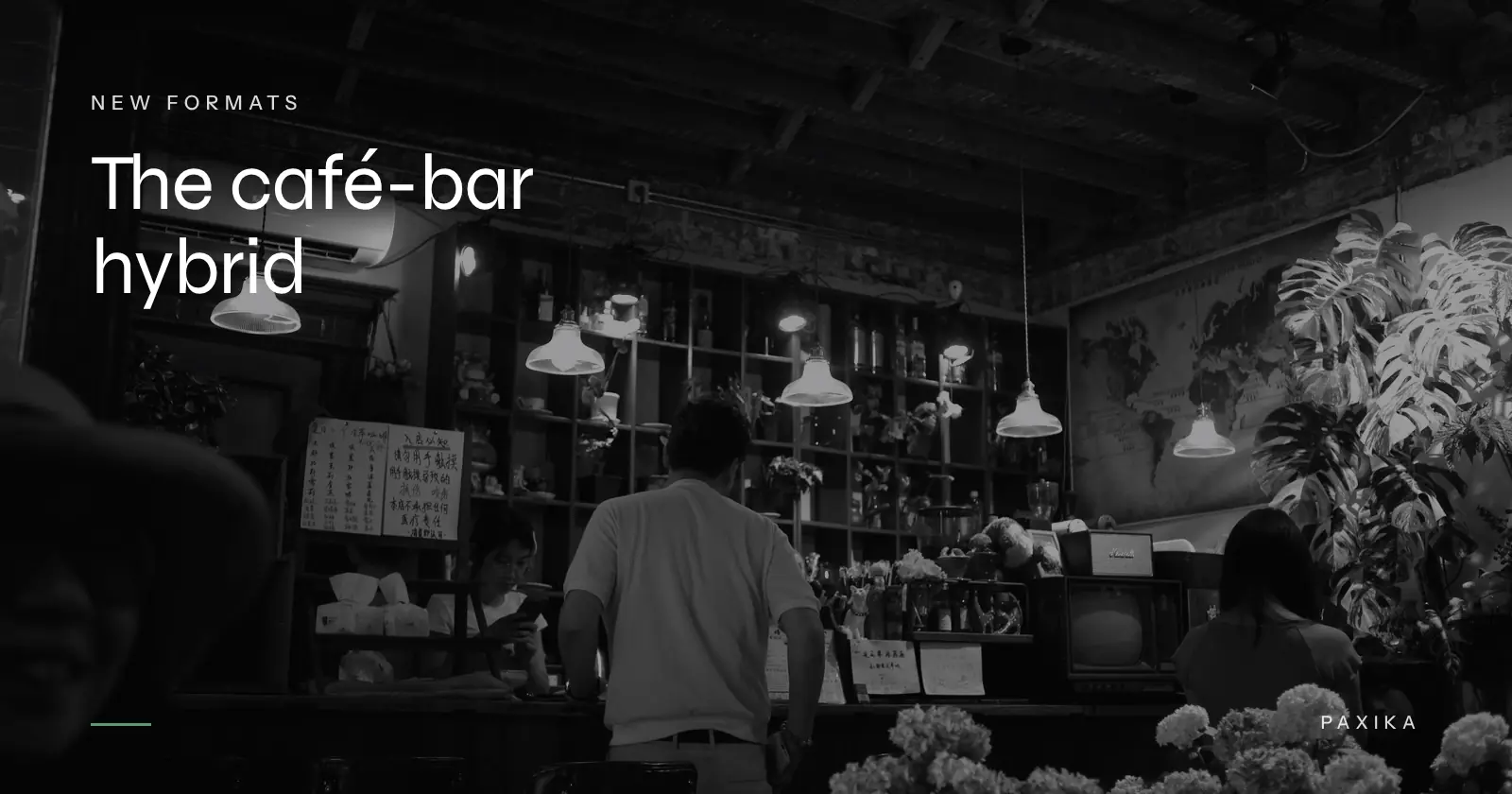
A café bar concept is one site that trades as a coffee shop in the morning, a light kitchen at midday and a drinks bar at night. The appeal is simple: one lease, one team and one set of equipment earn across more hours. The catch is that most failures happen at the seams between the day-parts, not inside them.
In much of Italy the idea is ordinary. Locals stop at the same venue for a morning coffee and pastry and an evening spritz or amaro. Elsewhere it is still treated as a novelty, and operators often copy the menu while missing the mechanics. This guide covers the mechanics.
Why does the café bar model make sense?
It makes sense because rent and core staff are fixed costs, and a coffee shop that closes at 5 pm leaves its most expensive asset idle for the rest of the day. A second day-part gives the same room a second chance to earn.
The Royal in Washington, D.C. put it plainly in a 2019 trade interview: a bar open only at night would have just seven hours of revenue to cover its rent, so it extended its hours. That is one operator's reasoning, not a rule, but it names the real driver. Extra hours matter because the rent does not shrink.
There is a guest argument too. Coffee and alcohol serve different needs, so the room meets different people at different times. The morning crowd wants speed. The evening crowd wants a reason to stay.
What does each day-part actually need?
Each day-part needs a different promise to the guest, and the menu should follow the promise rather than the other way round.
| Day-part | Guest wants | Service rhythm | What to protect |
|---|---|---|---|
| Morning | Speed, reliability | Fast, standing, many small tickets | Queue time, consistency |
| Midday and afternoon | A reason to sit | Slower, food-led, laptops and meetings | Seat turnover, a clear time limit on long stays |
| Evening | Atmosphere, a drink worth the trip | Seated, unhurried, higher spend | Lighting, music, bar craft |
The Italian bar is a good model for the first and last rows. Drinking standing at the counter is cheaper than sitting at a table, and the gap can be significant in city centres. That is a day-part tool in disguise: the price tells you how long you are renting the room.
The middle row is the weakest in most hybrids. Mornings fill themselves and evenings are an event. The afternoon needs a job, whether that is a lunch trade, a meeting-room feel or a small-plates menu that starts early.
Where does the changeover go wrong?
The changeover goes wrong when it is treated as a staffing event instead of a designed moment guests can see and feel.
Kobrick Coffee Cafe in New York, as described in the same trade piece, shows what a deliberate version looks like. The transition starts around 4 pm and finishes at 6 pm when the curtains close, the food menu switches to small plates at 4:30 pm and seasonal cocktails appear only after 6 pm. The Royal dims its lights at 5 pm and turns off the Wi-Fi.
Two lessons from this:
- The signal must be unmistakable. Lights, music, menu cards and glassware should all change at a set time. Guests then understand the rules without being told.
- Something must leave. Switching off Wi-Fi, clearing the laptop tables or changing seating tells the daytime crowd that the room is moving on.
The common mistake is a vague drift from one mode to the other. Daytime customers linger and evening guests arrive to a half-lit café. The fix is a fixed time, announced on the door and the menu.
What does it take to build a bar that works for both?
The bar has to be designed for the heavier job, which is the evening, and the coffee set-up has to fit inside it.
The clearest warning comes from Trust in St. Louis, which opened as a dual concept in January 2018 and converted to a cocktail bar only in June of that year. Its operators said coffee took too long to become profitable and the cocktails were covering it. They also built the bar 5 inches too low for barstools because they had designed it for coffee service. It is one case, so do not generalise from it. Do treat the lesson as a checklist item: confirm bar height, seating and back-of-house routes before construction.
Shared equipment helps. At Kobrick the espresso machine serves both coffee drinks and cocktails, and a pour-over machine is used to infuse the house Bloody Mary. The Royal uses a freezer behind the bar for ice and chilled glassware. Batch production of coffee and cocktails ahead of service keeps both fast.
A short design checklist:
- Bar height and seating set for evening use first.
- One espresso position that can serve both parts of the day.
- Cold storage for beer, wine and mixers, which a coffee shop would not normally need.
- A storage plan so daytime stock and evening stock do not collide.
- Lighting on dimmers, so the room can change without a rebuild.
How should you staff three day-parts?
Staff the venue with cross-trained people on overlapping shifts, and add a second shift rather than stretching one team.
Baristas and bartenders share many skills: speed, repeatability, calm under queues and a feel for guests. In Italian, barista means the person behind the bar, whether the drink is coffee or alcohol, a useful reminder that the two roles share a root. The Royal runs on cross-trained bartenders and baristas, with 25 employees in 2019.
Do not overstate the overlap, though. Alcohol service carries legal duties around age checks and refusing service, and rules differ by country. Budget for training. Budget, too, for the second shift. Trust's operators found the concept needed more staff for a second shift, and that cost showed up before the revenue did.
A practical split:
- An opening team that is fast and precise on coffee.
- A closing team that is strong on bar craft and guest conversation.
- A small crossover team during the changeover, who prepare the room and brief the evening staff.
What about licensing and the first twelve months?
Check the licence before you sign the lease. Licences are usually tied to the premises and its permitted hours, and the rules vary widely by country and city.
Ask four questions of your local authority: what hours does the licence allow, does it cover outdoor seating, can you sell takeaway alcohol, and can a café-style site with a counter and no full kitchen qualify? Kobrick's operator mentioned a 4 am liquor licence, which gives an idea of how late some jurisdictions allow trade, but your area may be far stricter. This is general information; check current local rules with a qualified adviser.
Also plan for a slow build. Trust's experience suggests the weaker day-part can take longer than expected to pay. Model each day-part as its own small business, with its own sales target, labour cost and break-even point, and set a review date. If one part is carrying the other for too long, either fix it or drop it, as Trust did. For the wider cost picture, see coffee shop unit economics.
A café bar is three small businesses that share a door.
Is a café bar right for you?
It is right if your site has real footfall in two or more parts of the day and you can fund a second shift. It is wrong if you are hoping one day-part will quietly rescue the other.
A simple decision rule: if the evening alone could pay its own labour and a fair share of rent, add the morning. If the morning alone could do the same, add the evening. If neither can stand alone, the hybrid will probably only spread the problem. Venues that mix other uses face similar trade-offs, which we cover in hybrid hospitality venues, and the wider pull toward spaces people use all day is explored in the third place economy.
Key takeaways
- A café bar earns by spreading fixed rent across more hours, but each day-part needs its own promise to the guest.
- Design the bar for the evening first, and fit the coffee set-up inside it.
- Treat the changeover as a visible, timed moment: lights, music, menu, glassware.
- Cross-train staff, but budget for training in alcohol service and for a second shift.
- Check the licence and its hours before signing the lease.
- Model each day-part separately and set a date to review the weaker one.
Questions people ask
What is a café bar concept?
It is a single venue that trades as a café in the morning, serves food through the middle of the day and turns into a bar in the evening. The same counter, espresso machine, staff and rent carry all three parts of the day, which is the main appeal and the main complication.
Is a café bar more profitable than a coffee shop?
Not automatically. Evening drinks usually carry a higher margin than coffee, and extra trading hours spread fixed rent, but a second shift adds labour and licensing cost. Profitability depends on whether the evening trade is strong enough to carry that extra cost. Model each day-part separately before you commit.
Do baristas and bartenders need different training?
Their skills overlap in speed, consistency and guest handling, but alcohol service adds legal duties such as checking age and refusing service to intoxicated guests. Many venues cross-train both roles, with a short formal alcohol-service qualification where local law requires one.
How do you stop a café bar feeling like two businesses?
Design the transition so guests can see it: change lighting, music, the menu board and the glassware at a set time. A clear signal tells regulars what the room is for now. Keeping one coherent identity across the day matters more than matching the menu.
Do you need a separate licence to serve alcohol in a café?
Usually the alcohol licence is tied to the premises and its permitted hours, and rules differ widely by country, region and city. Check what your local authority requires before you sign a lease, and confirm whether the licence covers late hours, takeaway sales and outdoor seating.
Sources
Read next
New formats
Hotel, Restaurant and Retail in One Space: Why Hybrids Are Winning
Hybrid venues are spreading because they spread fixed costs over more hours. They pay when the uses share a guest, a stock or a space, and struggle when they only share a roof.
New formats
The Third Place Economy: Why Hospitality Is Becoming Everyone's Living Room
People are spending more time alone, and cafes, bars and hotel lobbies are filling the gap. The catch: a true third place is cheap to enter and full of regulars. Here is how to run one.
Menu, food & drink
Coffee Shop Business Model: The Unit Economics of a Specialty Café
Coffee is cheap to make and expensive to serve. A coffee shop business plan should model the barista's minutes, not the beans. Here is the arithmetic behind a specialty café.